TRANSPARENT LED SCREEN VS TRADITIONAL LED SCREEN: Which Shines Brighter for Your Needs?
The LED display landscape is evolving rapidly, offering diverse solutions for captivating visual experiences. Two prominent contenders are Transparent LED Screens and Traditional LED Screens. Understanding their core differences is crucial for selecting the right technology for your specific application, budget, and aesthetic goals. Let’s break down the key battlegrounds.
1.Transparency & Aesthetics: Seeing Through the Difference
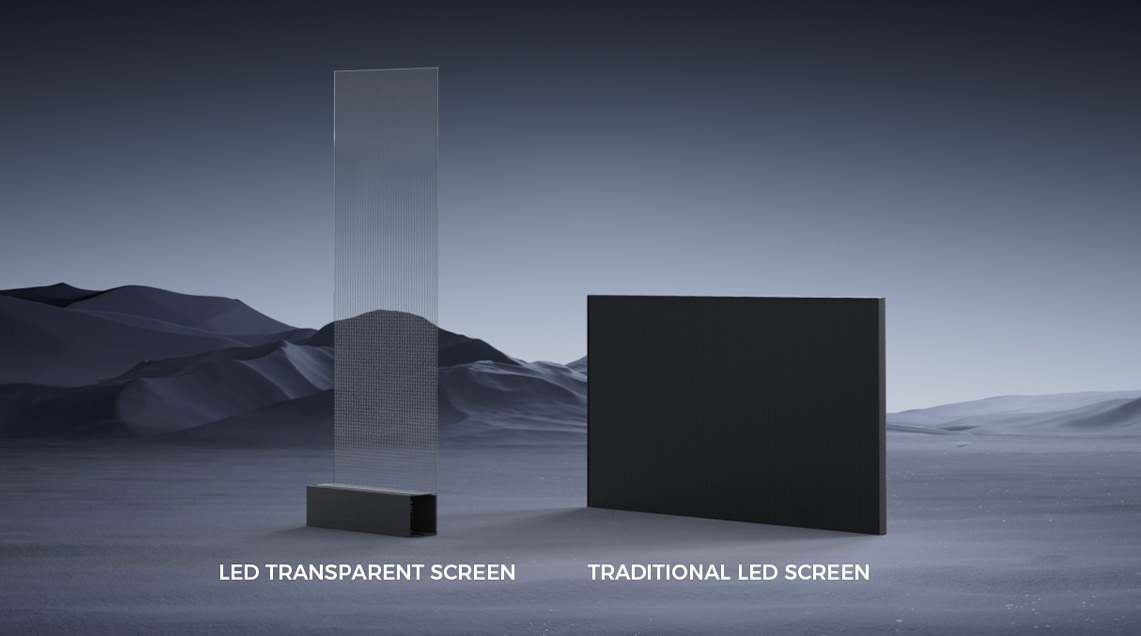
Traditional LED Screens: These are solid, opaque surfaces. They excel at blocking background views completely, creating a dominant, vibrant canvas perfect for command and control rooms, large outdoor billboards, or dedicated video walls where immersion is key. However, they fundamentally alter the architecture or view behind them.
Transparent LED Screens: The defining feature is their high light transmittance. Advanced products achieve upwards of 90% transparency, allowing natural light to pass through and preserving views of the environment behind the screen. This makes them ideal for retail storefronts, architectural integration (like glass facades), museum exhibits, and luxury showrooms where maintaining visibility and a sleek, modern aesthetic is paramount. They blend digital content seamlessly with the physical space.
2.Installation & Flexibility: Weight and Complexity Matter
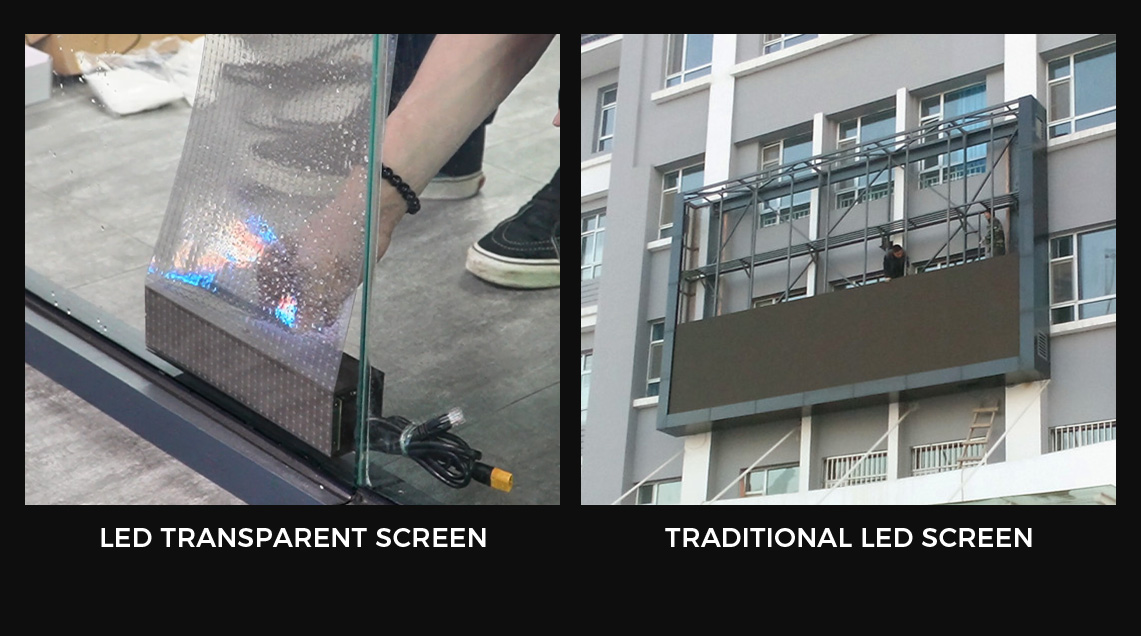
Traditional LED Screens: Often heavy and bulky, requiring robust, custom-built support structures (like heavy-duty trussing or walls). Installation can be complex, time-consuming, and sometimes necessitates significant building modifications. Relocation is typically difficult and expensive.
Transparent LED Screens: Engineered for lightweight design. Cutting-edge models feature ultra-thin modules (e.g., 0.88mm thick) weighing as little as 0.18kg per module. Crucially, some offer innovative reusable adhesive solutions, allowing for simple, non-destructive installation directly onto glass surfaces without heavy frameworks. This enables faster setup, lower structural load, and significantly easier reconfiguration or removal for temporary promotions or venue changes. Their slim profile maintains a near-invisible presence when off.
3.Visual Performance & Viewing Experience
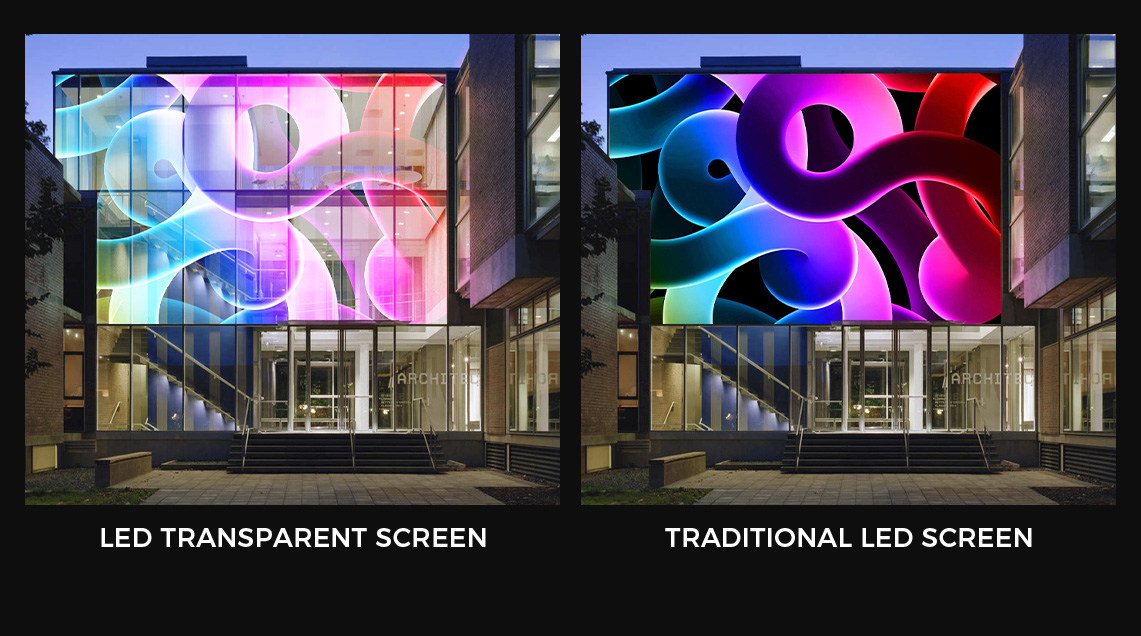
Traditional LED Screens: Dominate in sheer brightness (especially high-nit outdoor models) and are capable of very high resolutions (fine pixel pitches) suitable for close viewing distances. They offer excellent color saturation and contrast in controlled lighting but can suffer from visible pixelation if the pitch isn’t fine enough for the viewing distance.
Transparent LED Screens: Prioritize transparency, meaning absolute brightness levels are generally lower than dedicated opaque displays. However, they perform exceptionally well in environments with ambient light (like daylight) due to the high transparency. Resolution is continuously improving, with pitches like 0.88mm offering sharp imagery for many indoor applications. Crucially, their transparency inherently reduces the “tunnel vision” effect of opaque walls, creating a more open feel.
4.Reliability & Maintenance: Keeping the Lights On
Traditional LED Screens: Reliability depends heavily on the underlying technology (SMD or COB). Traditional SMD can be susceptible to dead pixels (“black dots”) and physical damage to individual lamp beads. Maintenance often requires accessing the front or rear of the display, which can be disruptive.
Transparent LED Screens: Utilizing advanced COB (Chip-on-Board) flip-chip technology combined with RGB integrated chips significantly enhances reliability. This approach drastically reduces the risk of dead pixels and black spots by minimizing failure points and offering superior protection. Front maintenance designs further simplify servicing. Furthermore, their inherent lower power consumption (e.g., averaging 50-60W per square meter) translates to less heat generation, contributing to longer lifespan and reduced cooling needs.
5.Content Impact & Context
Traditional LED Screens: Best for full-screen, immersive content where the display is the primary focal point. Ideal for videos, detailed graphics, and situations demanding maximum visual punch and brightness.
Transparent LED Screens: Excel in contextual advertising and enhancing environments. Content is designed to interact with the background, creating layered visuals. Think product information overlaid on actual merchandise in a window, or dynamic art integrated with an architectural feature. The magic lies in the fusion of digital and physical.
How to make a choice?
Choose Traditional LED Screens If:
Maximum brightness and highest possible resolution for close viewing are critical.
You need a completely opaque surface for total immersion or light blocking.
The installation location is permanent and can support significant weight and structure.
Budget constraints favor established, potentially lower-cost-per-panel solutions (though installation costs can be higher).
Choose Transparent LED Screens If:
Preserving views, natural light, and architectural aesthetics is non-negotiable.
Installation needs to be fast, lightweight, non-invasive (especially on glass), or potentially temporary.
You seek a modern, sophisticated look that integrates rather than dominates.
Reliability, lower power consumption, and easier maintenance are priorities.
Content strategy leverages the unique transparency effect for contextual impact.
The Future is Clear (and Bright)
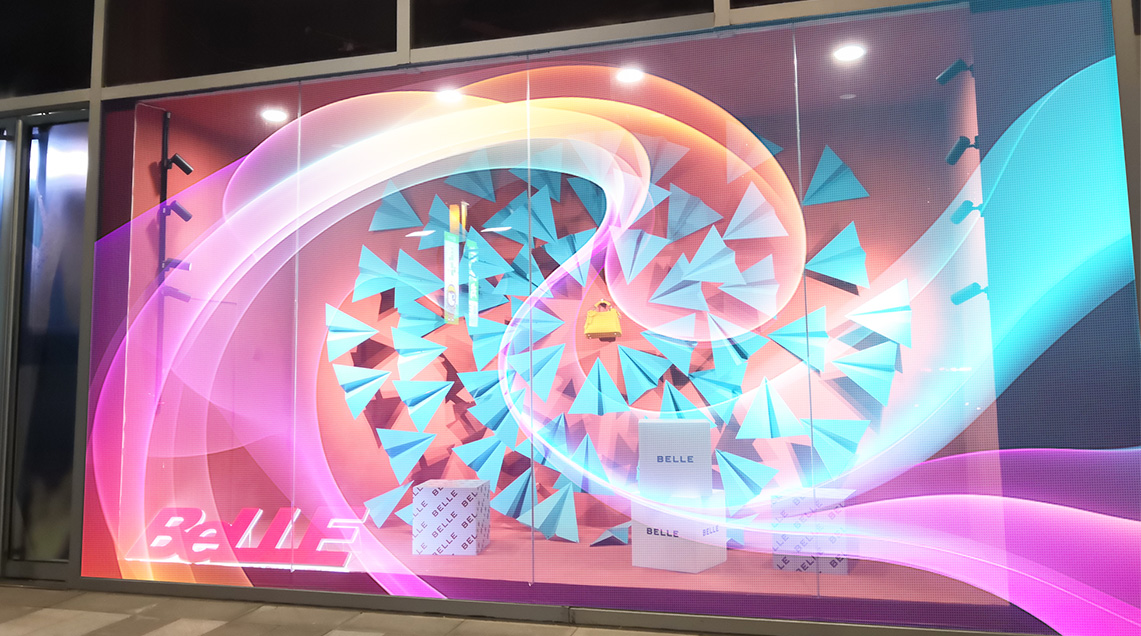
LED Transparent Screen technology, driven by innovations like ultra-thin, lightweight COB modules with high transparency and reliability, is unlocking entirely new applications. While traditional displays remain powerful workhorses for specific high-impact needs, transparent LEDs offer a compelling blend of aesthetics, flexibility, and modern performance for forward-thinking projects where integration and visual subtlety are key. Carefully evaluate your project’s core requirements against these distinct strengths to illuminate the best path forward.