Q2 2025 data from MSCI’s Report reveals troubling contradiction: vacancy rates in prime business districts of first-tier cities have risen to 8.7% year-on-year.
At the same time, consumer satisfaction with commercial spaces has hit a three-year low.
More notably, 63% of surveyed consumers said they “can’t remember distinguishing features of shopping malls they recently visited.”
This points to a collective challenge for commercial real estate operators – as homogeneous glass facades and standardized store layouts fail to impress consumers, and soaring operational costs meet stagnant rental income, the golden era of traditional commercial real estate appears to be fading.The next battlefield for commercial real estate: The Unseen Canvas is about to emerge!The Next Battleground in Commercial Real Estate: Transparent LED display screenHOW TO SAVE THE RETAIL INDUSTRY
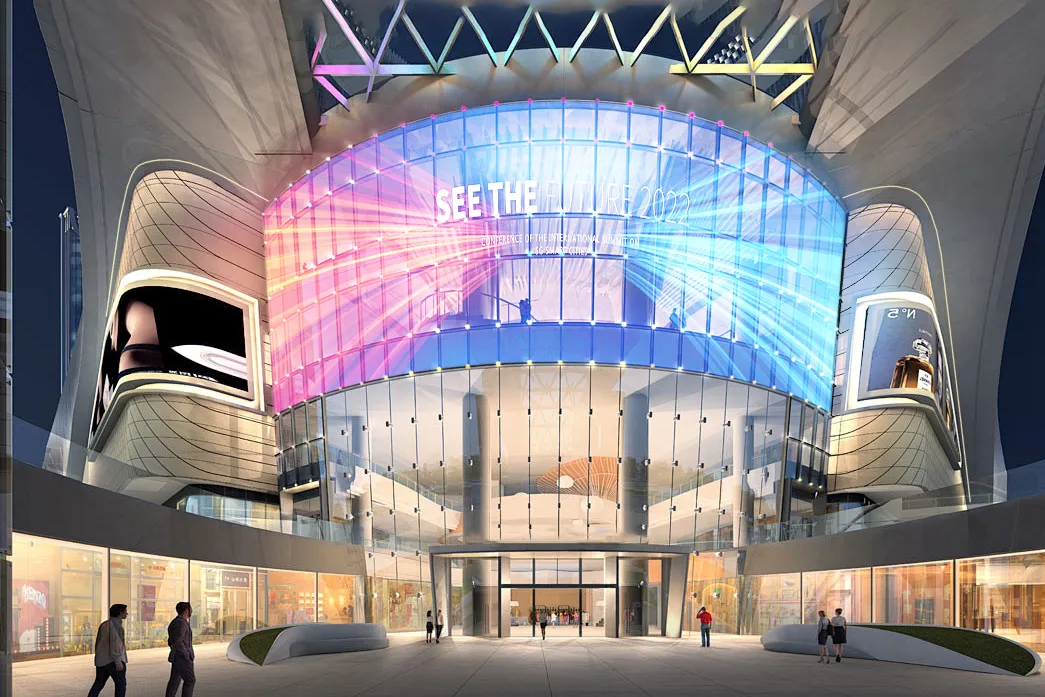
Part 01: Key Challenges in Commercial Real Estate
The Homogenization Trap
Most new shopping centers feel familiar: similar brands, identical layouts, and indistinguishable visual systems. An operations director from a leading commercial real estate group noted: “The real challenge isn’t leasing space, but making consumers want to stay longer – just 15 extra minutes typically means a 23% potential increase in spending.”The Next Battleground in Commercial Real Estate: Transparent LED display screenUnderutilized Space Value
While space is the core asset of commercial real estate, most operators haven’t fully activated its potential. Research shows that the revenue per square meter in mall common areas averages just one-eighth of that in retail zones, despite common areas occupying over 35% of total space. Approximately 20% of peripheral space remains chronically underutilized, creating hidden operational cost “black holes.”Data from a regional developer illustrates this imbalance: their mall atrium sees dense daily foot traffic (3.2 people per square meter) yet generates almost no direct revenue, while insufficient queuing space in dining areas causes about 15% of customers to leave due to long waits.
The Homogeneous Experience Problem
“Consumers enter malls but don’t know where to go, what to see, or what to experience,” as highlighted in a 2025 experience whitepaper. Commercial real estate faces a “triple homogenization” challenge: identical brand mixes (top 20 chains appear in 85% of malls), similar promotional events, and standardized customer journeys. This directly leads to “experience fatigue,” with research showing the average consumer’s effective attention span in malls has decreased from 42 minutes in 2019 to just 28 minutes in 2025.Growing Operational Cost Pressures
Operational costs are creating a squeeze: energy expenses have increased 18% year-on-year and labor costs have risen 9.2% annually, while rental yields have remained stagnant around 3.5% for five years. One financial model shows that utilities and cleaning for common areas alone can cost ¥12 million annually in a 100,000 sqm mall. Maintenance presents additional challenges – the average mall has over 230 displays with a 15% failure rate, causing both repair costs and hidden losses from disrupted navigation and marketing.Surface-Level Digitalization
Digital transformation often remains superficial. While 78% of malls claim digital operation, 65% only have basic Wi-Fi and social media messaging. This “halfway digitalization” wastes resources – one mall’s ¥3 million “smart navigation system” saw under 15% usage due to complexity and outdated information, becoming mere decoration. As one retail expert commented: “Digitalization shouldn’t be a tech layer over traditional space, but should rebuild space value.”The Next Battleground in Commercial Real Estate: Transparent LED display screen
Part 02: From Space Management to Experience Creation – FutureX’s Solutionshttps://www.futurexled.com/product/cob-lingpo/
Restoring Space’s Essential Beauty
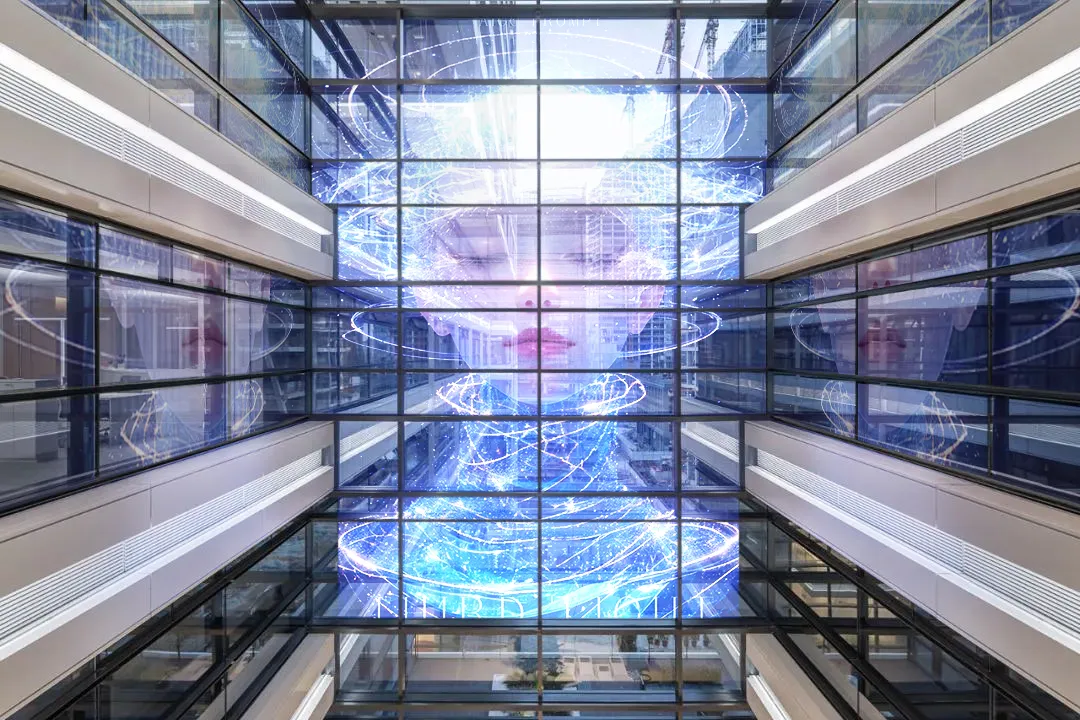
FutureX’s transparent display technology balances information delivery with spatial aesthetics through three key features:Slim Design: Ultra-thin profiles that blend into structures
High Transparency: Excellent light transmission preserving views
Energy Efficiency: Significant power reduction versus traditional LEDs

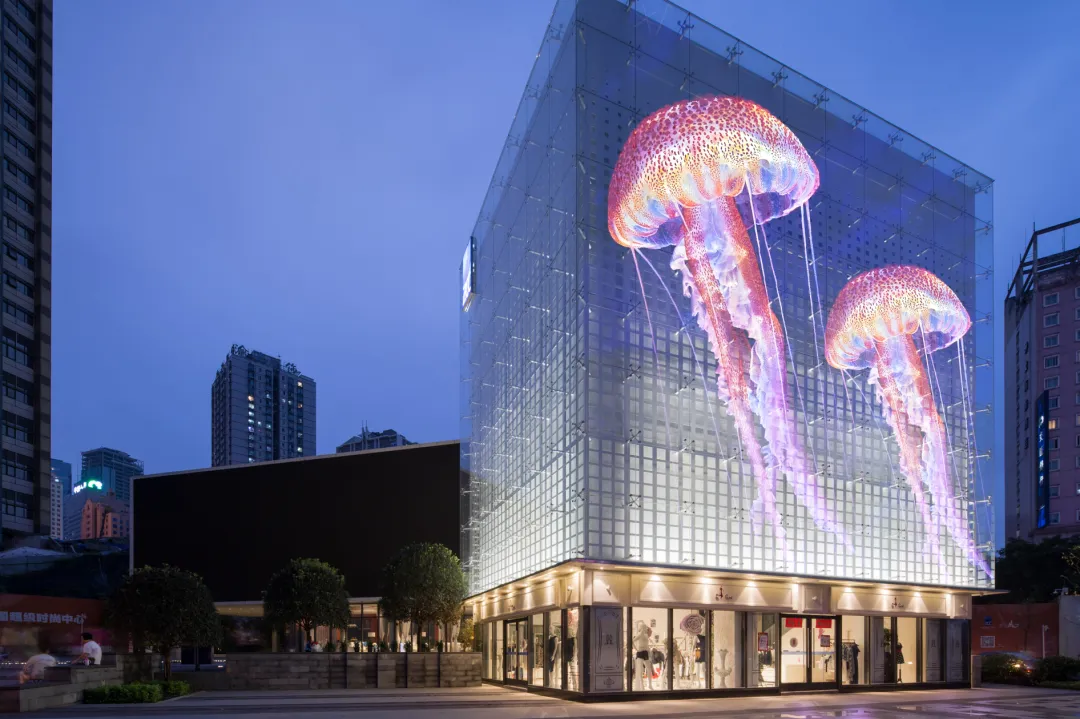
The Next Battleground in Commercial Real Estate: Transparent LED display screen at a Shanghai luxury mall demonstrates this approach: the screen stays virtually invisible by day, then transforms into a 30-meter immersive canvas at night. Data from 12 retrofitted malls shows a 17% increase in common area efficiency and peripheral space utilization jumping from 20% to 65%.

Smart Operations for Cost Efficiency
FutureX’s “Smart Operations Hub” delivers three key improvements:Integrated Systems: Combines navigation, information displays, and environmental controls
Reduced Power Use: COB-based transparent screens use 80% less energy, saving approximately ¥1.8 million annually in electricity per 100,000 sqm mall
Unmanned AI Services
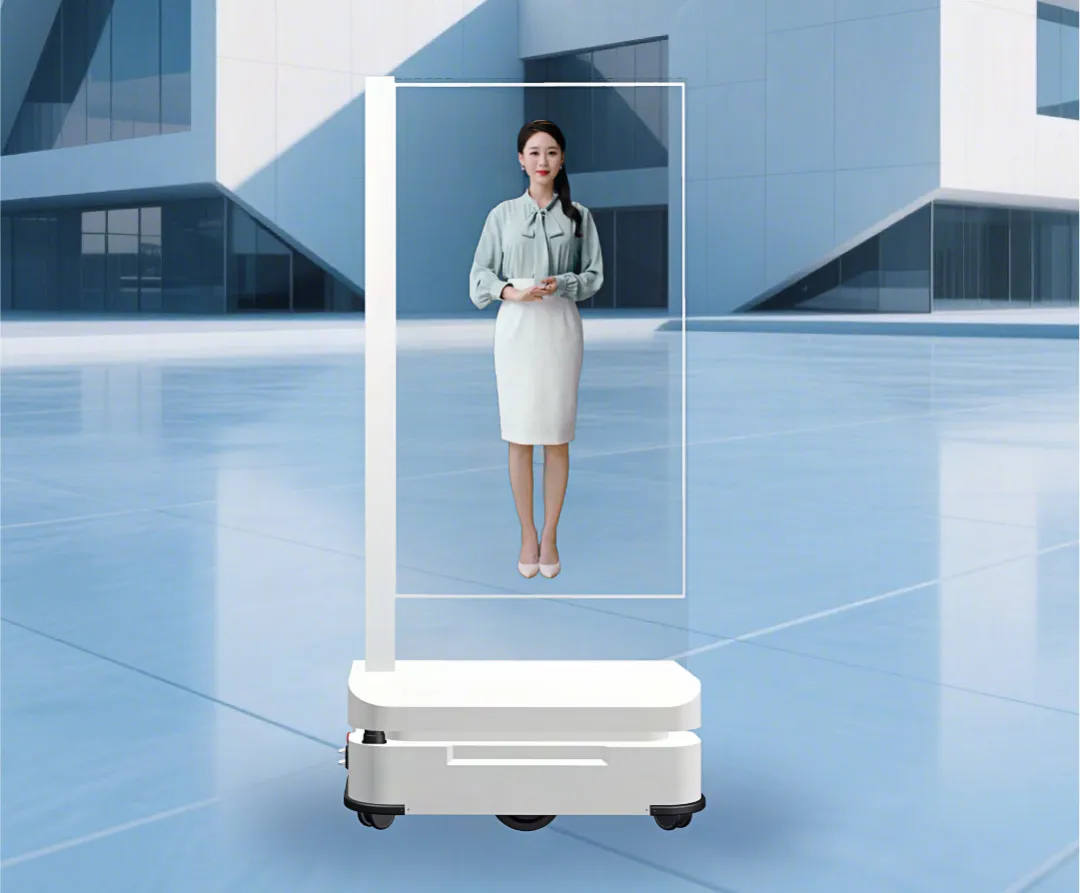
FutureX integrates self-service terminals, smart directories, and mobile service robots. A Beijing mall using OLED AI assistants reduced staff workload while improving service satisfaction, with wayfinding efficiency improving from 3.2 minutes to just 45 seconds.
Conclusion: Hidden in Space, Evident in Value
In today’s competitive landscape, technology should enable rather than distract. FutureX follows a “technology serves experience” philosophy, pursuing three design principles:
Formless (blending into environments)
Frictionless (natural interactions)
Boundaryless (merging physical and digital)
The water curtain display exemplifies this approach – using FutureX’s fine-pitch transparent technology to create a dynamic interface by night while preserving natural beauty by day. This “present when needed, invisible when not” concept represents the ideal for commercial space digitalization.The Next Battleground in Commercial Real Estate: Transparent LED display screen.
When display technology evolves from information carrier to spatial language, commercial real estate can truly shift from “managing space” to “engaging people.” Future commercial spaces will become perceptive, adaptive environments – places not just for transactions, but for emotional connections; not just for brand displays, but for experience creation; not just for leasing space, but for shared value.
This is the transformation FutureX brings: technology’s ultimate purpose isn’t to change space, but to unlock its potential; not to replace human connection, but to deepen the relationship between people and space.
When every screen acts as a catalyst for spatial value, commercial real estate can truly elevate its competitive advantage in the experience economy era.