
What happens when LED display technology-XR Virtual Production crosses over from commercial use to virtual film production?https://www.arri.com/en/solutions/virtual-production/vp-color-management
In 2025, film producers report location shooting costs overseas have risen 40%, post-production timelines have extended by 3 months, while streaming platforms are paying 15% less for content. Since the pandemic, the global film industry has been trapped in a cycle of “high costs, low returns.” However, the success of The Mandalorian—which used XR Virtual Production to cut location costs by 60% and post-production time by 40%—has captured the industry’s attention.
The Bottlenecks of Traditional Film Production
Walk onto a traditional green screen set, and you’ll find actors performing against a monochrome backdrop while the director imagines the final scene. Although green screen has served the industry for decades, it comes with persistent limitations.
These challenges are especially clear in major productions:
Avengers: Endgame (2019) required over 2,500 VFX shots, with post-production costs reaching hundreds of millions of dollars. Epic scenes like the final battle were shot against green screens, with effects added frame by frame later—a time-consuming process that also demanded actors rely entirely on imagination.

Jurassic World: Dominion (2022 invested heavily in VFX to bring dinosaurs to life, with a significant portion of the budget dedicated to CGI. Actors performed in front of green screens, interacting with creatures that weren’t there—limiting both performance authenticity and creative flexibility.
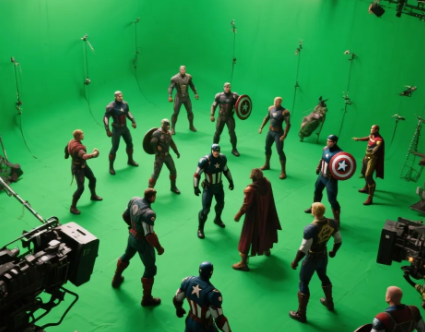
These examples highlight core issues in traditional production:
Heavy post-production workload—mid-budget sci-fi films often spend up to 35% of their budget on post, nearly half of it on green screen-related tasks.
Disconnected actor performance and lack of realism.
Unnatural lighting that breaks immersion.
These challenges don’t just raise costs—they also limit creative freedom.
How XR Virtual Production Works & Why It’s a Breakthroughhttps://www.unrealengine.com/en-US
So, what is XR virtual production, and how is it different?
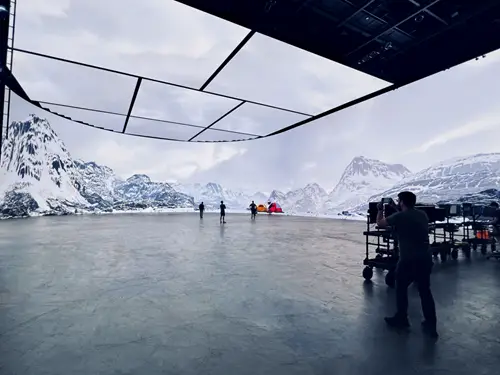
In simple terms, XR virtual production uses ultra-high-definition LED screens as dynamic backgrounds. Virtual environments are rendered in real-time and displayed on these screens. Actors perform under real lighting, and the camera captures the final composite live.
Key differences from green screen include:
Realistic Lighting: The LED screens provide environmental lighting that naturally reflects on actors and props. This eliminates “green spill” and offers authentic light interaction—exemplified in The Mandalorian, where the LED wall also served as the primary light source.
Real-Time Feedback: Directors see the final shot live in the monitor—no more imagining the final result.
Camera Tracking & Perspective Adjustment: Screens adjust in real-time based on camera position, creating a convincing, infinite virtual space.
FutureX’s Total XR Virtual Studio Solutionhttps://www.futurexled.com/product/flooring/
As an experienced provider in display technology, FutureX has innovatively adapted its expertise to virtual film production, launching an XR virtual production Solution designed to tackle industry challenges head-on.
Immersive XR Virtual Studio
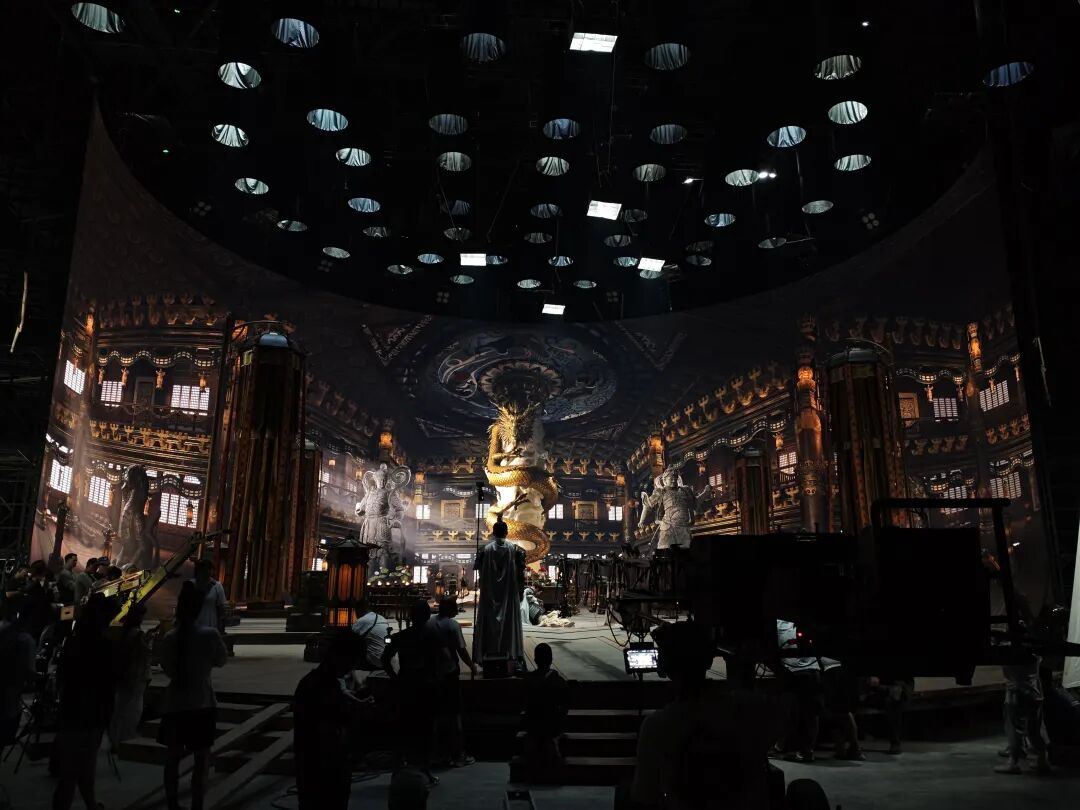
The core of FutureX’s XR studio is a fully immersive virtual production environment. Through large curved LED screens and ceiling-mounted displays, we create a seamless virtual shooting space with no visual breaks. At the Chongqing Yongchuan Studio, a 42-meter long, 7-meter high curved LED screen set a record in Asia, offering filmmakers unprecedented creative flexibility.
This system goes beyond background replacement—it turns the entire set into an interactive virtual world where actors respond to the environment, and directors see the final frame in real time.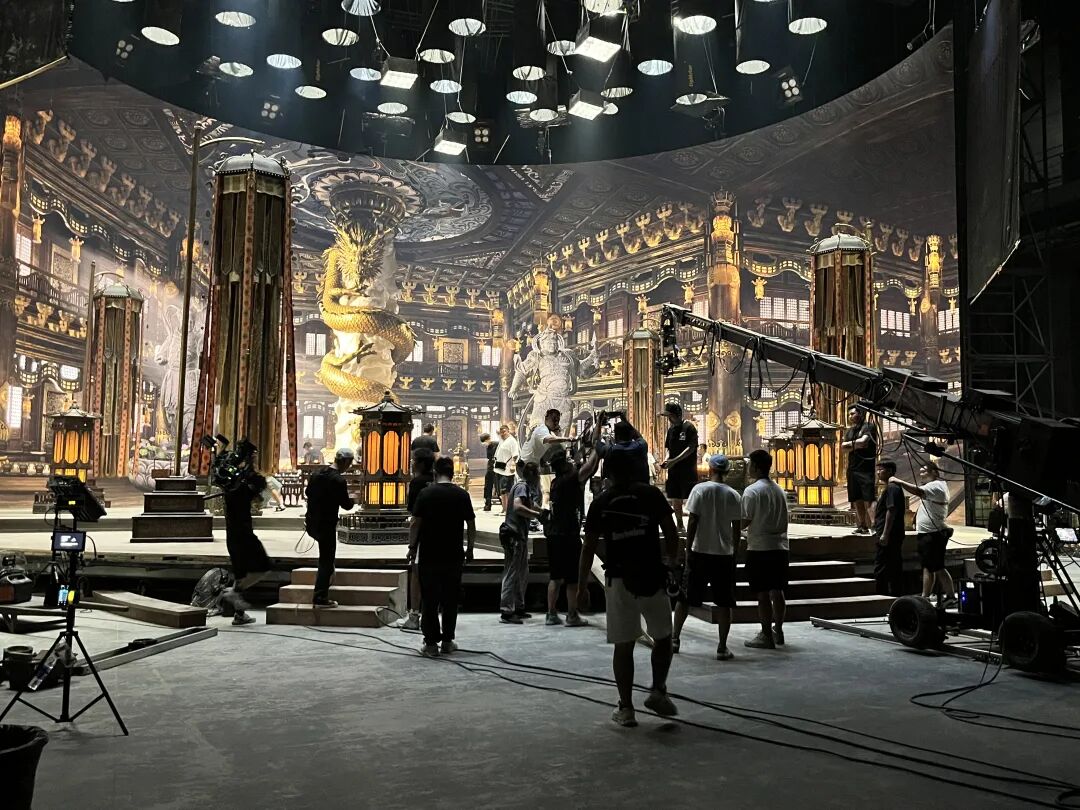
High-Precision Display for Film
FutureX’s XR studios support HDR10+ high dynamic range technology, accurately reproducing everything from faint starlight to bright sunlight. 16-bit color depth ensures smooth color transitions, eliminating banding issues common in earlier virtual production systems.
Crucially, the screen acts as a high-quality light source, providing realistic environmental lighting that removes edge spill and drastically cuts post-production cleanup.
Real-Time Interaction Between Real and Virtual
One of the most striking features of FutureX’s XR studio is real-time interaction. Using proprietary technology, actors can “touch” virtual objects, virtual shadows fall naturally on performers, and reflections appear realistically in virtual mirrors.
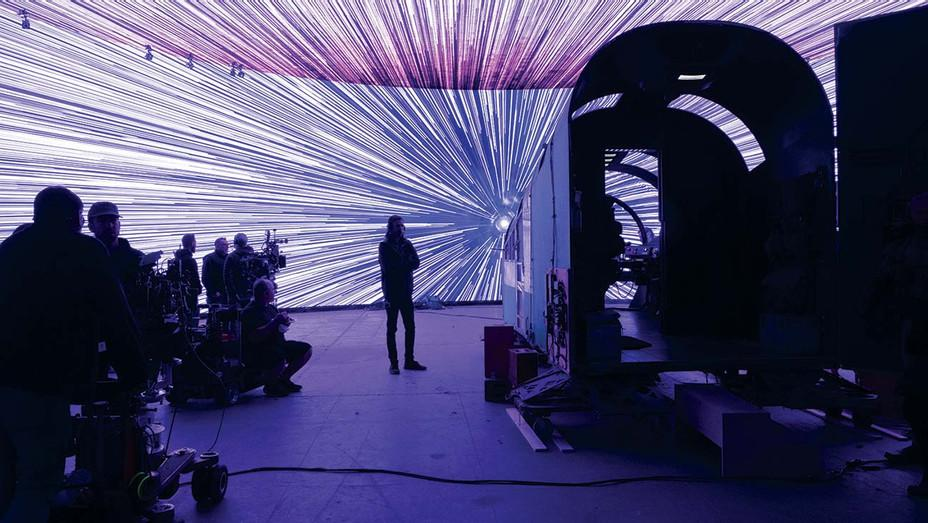
This breakthrough enabled scenes in The Mandalorian—like a character touching a hologram or starscapes shifting outside a spaceship window—to be captured in-camera, without complex post-production.
Modular Design & Fast Deployment
FutureX’s XR studios use a modular architecture, allowing flexible configurations—from curved three-wall setups for mid-size projects to full panoramic systems for large productions. This adaptability makes virtual production accessible to projects of varying budgets.
XR Virtual Production in Action: From The Mandalorian to Local Blockbusters
In the streaming era, speed and quality are equally important. Disney’s The Mandalorian became a landmark example—using 2,300㎡ of LED screens to create 15 planetary environments, cutting production time per episode from 21 to 14 days and saving $1.8 million per episode.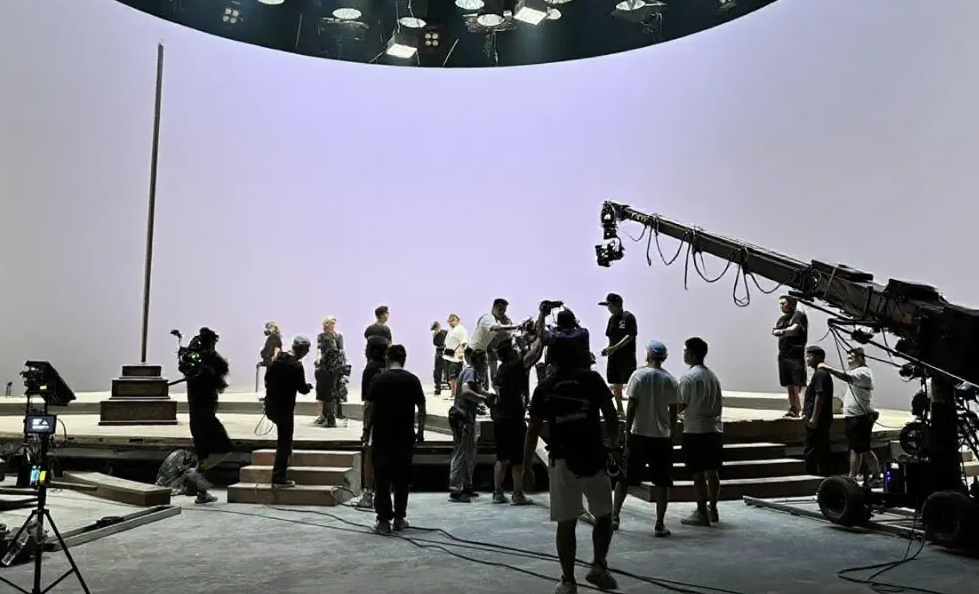
Chinese studios are also adopting the technology. One major film group invested ¥200 million in a virtual production base featuring a 12m×6m LED wall, a 360° LED ceiling, and 8K real-time rendering. Since its launch, the base has completed three fantasy series, reporting:
Scene change time reduced from 4 hours to 20 minutes
Actor scheduling efficiency improved by 35%
Lighting crew size cut by 50%
Even mid-budget projects are benefiting. A web series team achieved “interstellar-level” visuals on a ¥3 million budget—something previously only possible with blockbuster funding.
How FutureX is Reshaping the Production Process
Pre-Production: FutureX offers not just hardware but end-to-end production support. With a library of pre-built digital environments, teams can preview scenes under different lighting before shooting begins. One fantasy series cut scene prep time by 70% using this approach.
Production: Directors see near-final frames live. Actors perform within a vibrant virtual world. The system allows on-the-fly adjustments to digital scenes, with changes appearing instantly on the LED wall.
In one sci-fi film, a director shot the same scene at four different times of day (dawn, noon, dusk, night) in one afternoon—a task that would have taken days with traditional methods.
Post-Production: With backgrounds already captured in-camera, compositing work is greatly reduced. One period drama team shortened post from five months to two and cut post costs by over 50%.

Why Choose FutureX?
Choosing FutureX means opting for a more efficient, creative, and cost-effective production process. Our strength lies not only in hardware specs but also in deep understanding of the full filmmaking workflow.
From initial design and installation to technical support, FutureX offers one-stop service. Our expert team tailors XR virtual studio solutions to fit the budget and creative needs of each project.
From commercial displays to XR virtual production, FutureX is helping the film industry break free from “high cost, low return” challenges—ushering in a more efficient and creatively liberated future.
