
“When culture is no longer just sleeping on display boards.”
Thirty miles west of Jinan, the spring city, the morning in Shuangquan Village, Mashan Town is shrouded in mist. The koi farmer pushed open the oxygen pump in the feeding pool, and a splash of water startled a fish named “Showa Three Colors” – the fish king who had won the Chinese Famous Koi Competition – swimming towards the bottom of the pool.
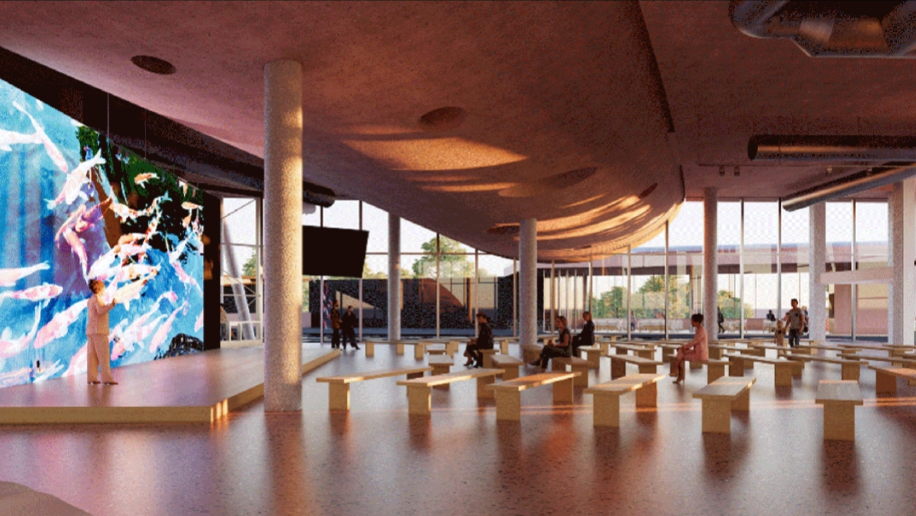
Above the water surface, a giant group of koi fish is displayed suspended in mid air on the FutureXLED™️ holographic invisible screen, blending with the distant black mountains to create a fantastic picture of “koi leaping over green mountains”.
“In the past, tourists left the fishpond after taking pictures, and now they are holding their mobile phones to chase the holographic koi photos.” The project operator pointed to the AR two-dimensional code in the LED holographic invisible screen on the glass curtain wall, “Last week, a young man scanned out the ‘lucky sign’, and sent a video in Tiktok, which has played more than one million copies.”
This scene is exactly the daily routine of Mashan Baili Rural Resort. When more than 70% of rural tourism projects in China are trapped in the homogenization dilemma of “homestay+picking”, this rural complex with koi farming as its core and covering 10 villages has activated the cultural genes of Bianque’s hometown with the help of FutureXLED™️ holographic invisible screen technology, resulting in a 140% increase in passenger flow by 2025 against the trend.
Project Guide
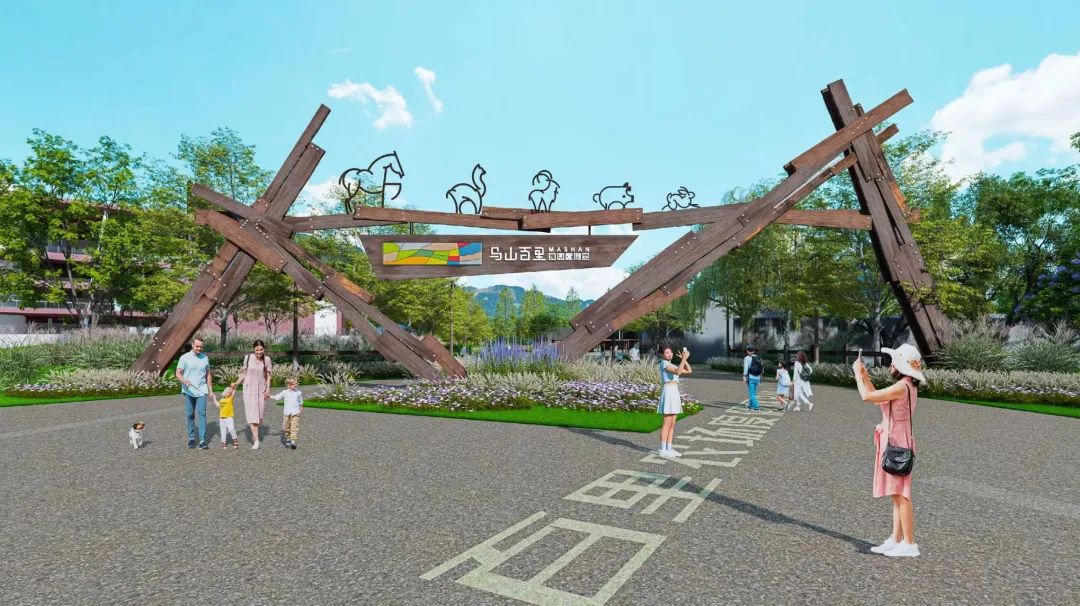
The Mashan Baili Rural Resort project is located in Shuangquan Village, Mashan Town, which is the permanent venue for the China Famous Koi Competition. Leveraging the advantages of Koi farming, Chinese herbal medicine cultivation, and ecological agriculture, the project aims to build a rural resort with themes such as ornamental fish farming, national themed events, and health and wellness homestays.
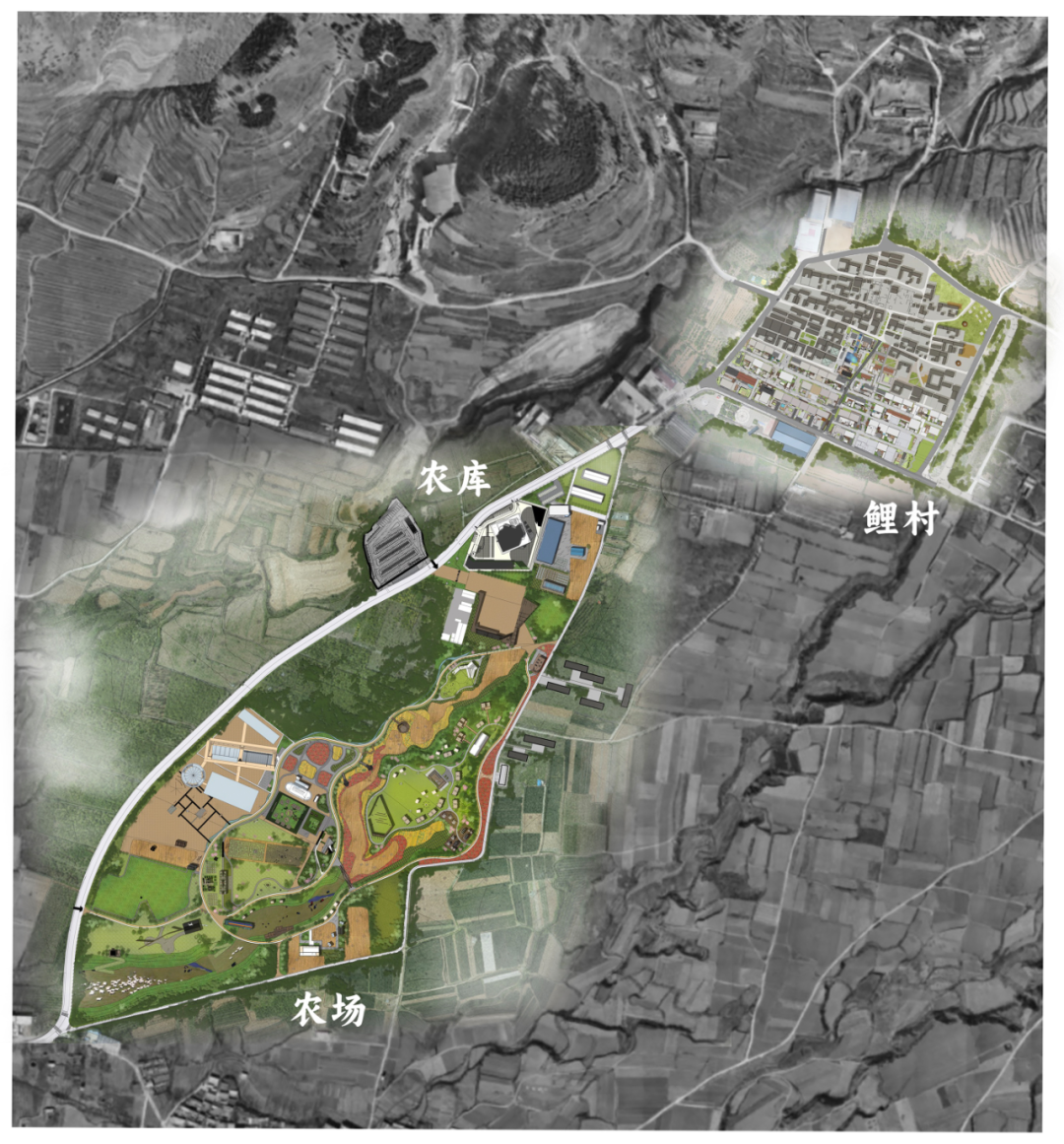
Mashan Baili Rural Resort follows the development concept of “focusing on one koi, developing one industry, and driving a region”, with Shuangquanzhuang Village as the core, involving 10 villages, and building a cloud koi boutique park that integrates koi breeding, observation and learning, and competition functions; Bailima Mountain Resort integrates waterfront boardwalk, village main street (catering, bars, homestays), and art square; Future ecological farm integrating ecological farm amusement park, tent camping site, and entertainment commercial area. Build a new space that meets the current people’s pursuit of “exquisite agriculture, exquisite countryside, and exquisite life”. Through the construction of the park, Mashan Town has been awarded the title of “Permanent Host of China Famous Koi Competition”, helping Jinan City to win the “China Famous Koi City”.
Pain point breakthrough
The ‘aphasia’ in the hometown of Bianque
Tourists hurriedly walked in front of the wall full of cultural exhibition boards, and after the 4th China Famous Koi Competition, the occupancy rate of homestays plummeted by 70%. The resort consisting of 10 villages is like a charming but annoying maze. Despite holding the two trump cards of “China’s Famous Koi City” and “Origin of Bian Que Culture”, the initial research of the project showed that 72% of tourists could not recognize the differences in Koi species, and 89% of tourists were unaware of the origin between Mashan and Bian Que.
Culture has become a display board on the wall, and homestays have become a backdrop for taking photos, “the project operators wrote about their anxiety every late night of overtime.” We hold golden rice bowls, but we cannot afford the flow and vitality
At the same time, the 23 square kilometer resort area is distributed in three major areas: Nongku, Licun, and Farm. Licun has also planned a variety of vacation formats, divided into three major areas: accommodation, leisure blocks, and traditional village style tourism areas, with intricate and complex routes. Traditional signage caused 30% of tourists to get lost during the event, with an average daily walking distance of over 8 kilometers.
During the koi competition, the daily passenger flow exceeded 10000, but after the competition, it dropped sharply by 70%. We are like setting off fireworks during the Chinese New Year, brilliant but short-lived. “The project operator’s metaphor highlights the biggest pain point of rural cultural tourism.
Technology Empowerment
Reconstructing the laws of the countryside, the ‘invisible revolution’ of holographic screens
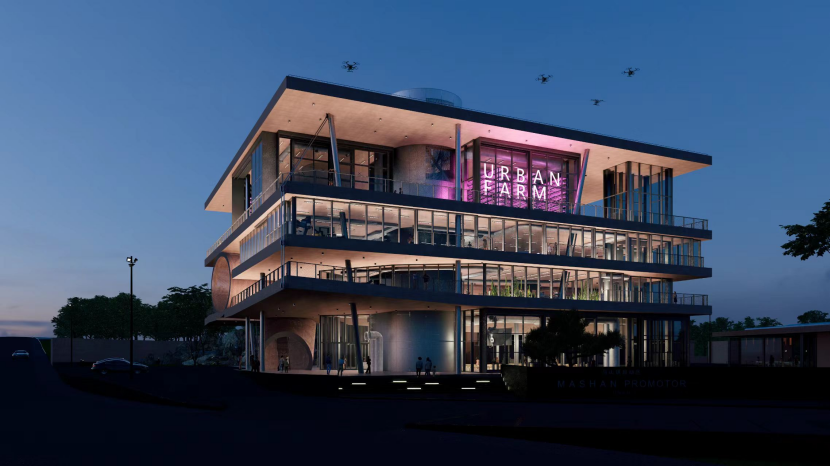
At the core landmark building of the resort – FARM LAB, the FutureXLED™️holographic invisible screen is undergoing a spatial revolution – almost invisible during the day, with a light transmittance of 93.4%, sunlight penetrates the glass without obstruction, and the koi fish in the screen and the distant mountain light and shadow on the glass complement each other; When night falls, this layer of “glass skin” quietly awakens – a group of 2304PPI precision koi fish swims in front of the real mountain scenery. Tourists reach out and lightly touch it, and the 3D koi fish “all seem to be wandering aimlessly”.
Without adding any bricks or tiles, let old buildings tell new stories. “The FutureXLED™️ holographic invisible screen achieves cultural scene reconstruction with zero space occupation, becoming a key flow attraction field to activate regional cultural and tourism value.
The most shocking thing is the nighttime ecological theater. “Zhang Wei, a research mentor from Beijing, showed a video: In front of the real mountain scenery, a holographic flat magpie portrait is picking herbs, and the floating subtitles of” Compendium of Materia Medica “appear with a light tap of her finger.” This is ten times more vivid than textbooks:
More crucial changes occur in places where tourists cannot see:
Breaking the maze of movement: The holographic screen at the fork in the road transforms into an intelligent guide, scans the QR code, and the virtual koi guides you through the village and village, eliminating any lost complaints;
The Rebirth of Bianque Culture: On the central screen of the exhibition hall on the fourth floor of the Agricultural Bank, the audience imitates the pulse taking gesture, and the pulse animation flows with their fingertips, increasing the efficiency of cultural transmission by 3.8 times;
Event traffic accumulation: The “lucky sign” generated by AR group photos swept social media platforms, and the occupancy rate of homestays during the off-season after the competition was locked at a high level of 65% against the trend.
Benefit decoding
The survival formula of digital countryside
In the late night cultural center, the last group of tourists chased the champion koi swimming on the screen wall with their phones. Engineer FutureXLED™️ repeated his mission in various projects: “The highest level of technology is invisibility. When tourists think they are touching the mountains and waters, technology truly integrates into the land.
FutureXLED™️holographic invisible screen, as a “breathing glass”, is reconstructing the underlying logic of the operation of Mashan Baili Rural Resort:
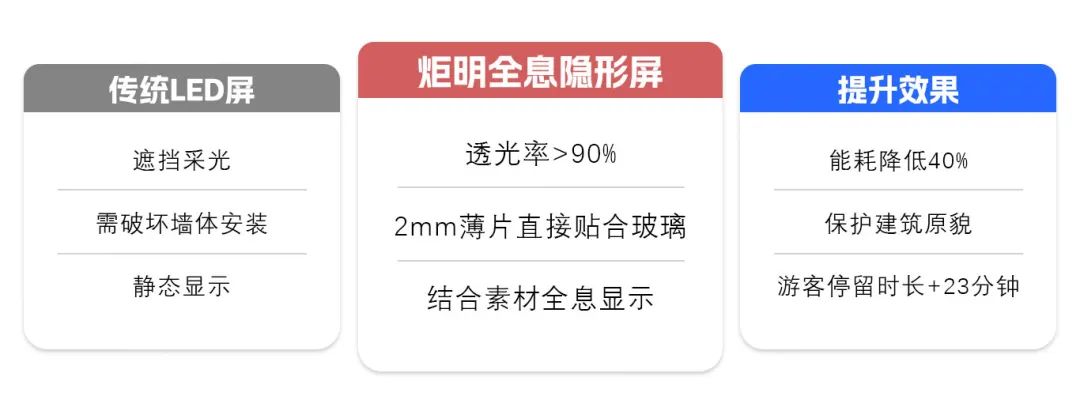
Rewriting the cost formula: Compared to the traditional LED screen with an energy consumption of 1200W/㎡, the holographic screen with a power consumption of<370W/㎡ saves 346000 yuan in annual electricity bills;
Disruption of traffic formula: During the event, millions of exposures were deposited into private domain assets through the “scan interaction conversion” link, with a secondary consumption conversion rate of 34% far exceeding the industry average;
Cultural formula awakening: Bian Que AI assistant sits in front of the glass curtain wall for consultation, with tourists staying for an average of 23 minutes, and children chasing virtual medicinal farmers to identify hundreds of herbs.
Standing on the newly completed observation deck overlooking, a project operator points to the glass curtain wall in the clouds and mist: “Those seemingly transparent screens are reconstructing the cultural and tourism genes of the countryside.” As the last ray of sunset brushes over the mountain ridge, the image of the flat magpie on the holographic invisible screen of the torch lit LED appears with a smile, and the ancient saying emerges in the twilight: “The upper medicine treats the country, the traditional Chinese medicine practitioners, and the lower medicine treats the disease.” At this moment, Mashan is using technology to activate the “way” of culture and write contemporary medical prescriptions for rural revitalization.
