
Through the combined effects of low valleys and rising tides, China’s large commercial display industry has gone through ups and downs in 2024. At the starting point of major economies and international currency interest rates returning to a loose cycle, the commercial display industry will also face more “cyclical, technological, and geo economic” uncertainties in 2025.
The limited foundation laid in 2024 and the increasing variables in 2025 will continue to test the ability of the commercial display industry to sustain operations, boost domestic demand, and explore supply side structural opportunities. These three aspects will also constitute the main trend of market transformation and continuous deepening of international development in the commercial display industry in 2025, bringing growth opportunities and segmentation windows for the industry in 2025.
1. MIP LED sales have exploded
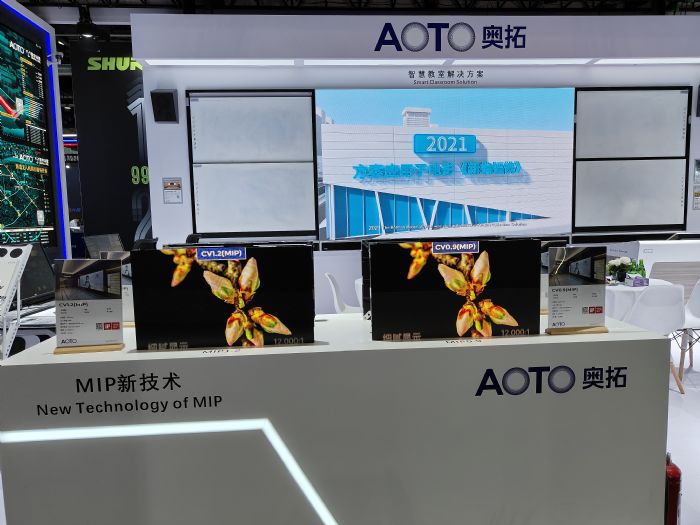
According to data, the global sales of MiP LED display products in 2023 can be ignored. However, by 2024, the sales of this technology in the domestic small pitch LED market will have approached 4% of the entire market, and the sales area will account for over 1%. The market is progressing rapidly, but the total amount is still limited.
However, from another perspective, the production capacity change of MiP LED by the end of 2024 is particularly significant: for example, Zhouming plans to expand MiP production capacity to 6000KK/month by the end of 2024; Liard plans to expand the production of MiP packaging structures to 4000KK/month in 2024; Hubei Aimaipu Optoelectronics claims to have a MiP (Micro LED in PKG) production capacity of 2000kk/month, with plans to expand the production capacity to 5000kk/month by the end of 2025; Maiyang Display predicts that by the end of 2025, it will achieve a monthly production capacity release of 2000kk MiP and 500kk D-MiP
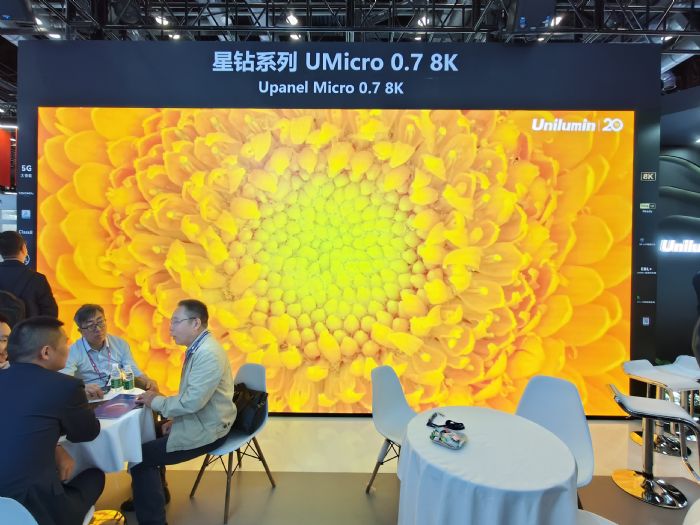
The above are only the plans of some manufacturers. In fact, most leading LED direct display, chip, and packaging companies are planning their own MiP production capacity. Even if these expansion plans are only partially implemented, such as one-third, the total production capacity of MiP in 2025 will increase by more than 2-3 times compared to 2024.
The core change brought about by a significant expansion of production will not only be an increase in supply, but also a more significant decrease in costs. For example, some predictions suggest that MiP products could achieve around 30% of their “worst-case scenario” by 2025, due to cost reductions brought about by scale and industry chain optimization. For competition with COB, on the one hand, MiP products such as 0202 are also used for COB products; On the other hand, in many mainstream MiP application specifications, its cost is currently “not significantly higher” than COB. As the cost of MiP decreases significantly due to its scale, the cost difference between MiP and COB will continue to narrow, and even reverse in some specification product lines.
From the history of COB products, their explosive development began at the end of 2022, due to the cost doubling caused by the increase in scale. MiP products may replicate this process at a faster iteration speed. By 2025, MiP will further expand its market and achieve double growth, and even more growth is expected.
2. AM LED scale supply opens in the first year
Can LED direct display usher in a qualitative change in 2025 as it transitions from PM driven to AM driven era? From the current supply side readiness, the probability is extremely high. 2025 is likely to be the year of AM LED.
On the one hand, the semiconductor panel industry has reached a qualitative change point in promoting AM TFT Micro LED direct display. For example, AU stated that its AM TFT Micro LED direct display product line, which has undergone a 4th generation LCD line transformation, will be mass-produced in small quantities by 2025. Shentianma also stated that its Xiamen AM TFT Micro LED direct display product line will strive for small batch production, and Shentianma has reached a cooperation agreement with Hisense. The trial production line of Xinying Display Micro LED, a joint venture between TCL Huaxing and Sanan, has been completed and is expected to achieve small-scale trial production by 2025. The world’s first AM TFT Micro LED direct display product line invested by Visionox will be lit up by the end of 2024. BOE, which has a huge investment in LED direct display, is leading the industry in terms of promotion scale; Konka, which has dropped its strategic investment in LED direct display, is also accelerating the production of new products.
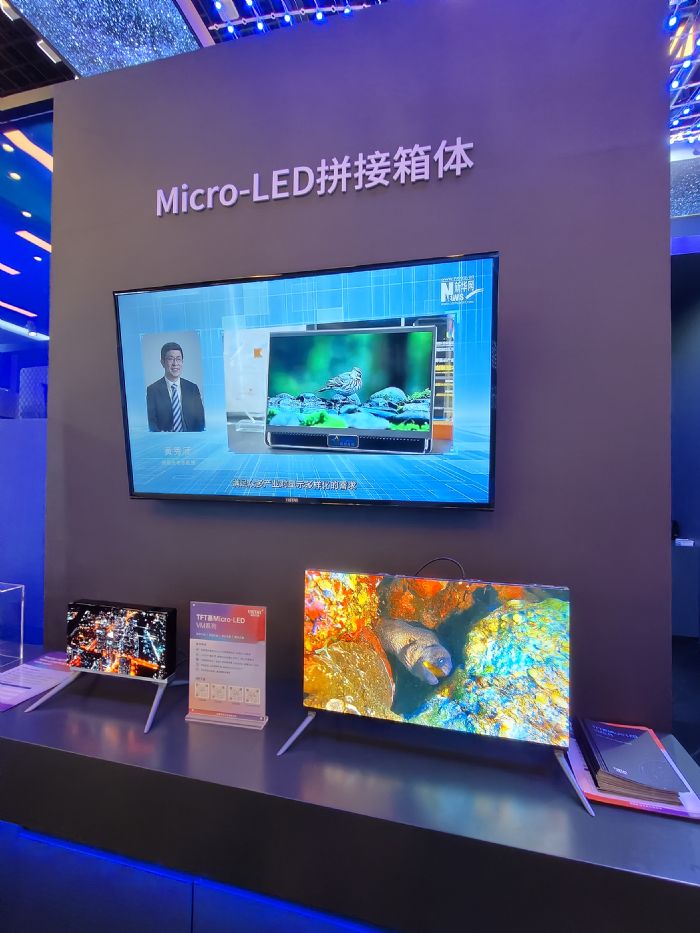
For the efforts of “panel and TV” enterprises in AM TFT Micro LED direct display, it is not just about splicing large screens and home large screen TVs. They also see opportunities for AM TFT Micro LED direct display in the automotive market. Or in other words, the production of AM TFT Micro LED direct display may usher in a common “first year” of “small and medium-sized screens and large screens”.
In terms of AM driving, another technological path is also emerging in 2024. This is AM MiP (AMiP), the MiP solution that integrates Micro ICs! The MiP industry believes that traditional MiP and AMiP will be high-low partners for a period of time.
For example, the AMiP product developed by Sanan Optoelectronics’ Micro LED subsidiary brand “Aimep” successfully lit up on November 28th. Maiyang Display has achieved heterogeneous composition of Micro IC and Micro LED and successfully lit up Driver MIP products. It plans to achieve a production capacity layout of 500kk by the end of 2025. In addition, AMiP is also one of the main focuses of glass based packaging structures. Through the glass through-hole connection structure, AMiP has higher integration, more stable and clear images, and is more energy-efficient, which is conducive to the development of lightweight LED direct display products. AMiP is also compatible with traditional surface mount technology, PCB substrates, and even COB process terminal product design.
The two major paths of TFT Micro LED and AMiP jointly promote the accelerated landing of AM driven LED displays in 2025, which will help LED direct display further accelerate into the AM era. The industry believes that as Micro LED chip machines become smaller, the advantages and necessity of AM driving will also increase. This is one of the key mainstream trends for the future development of the industry.
3. Micro LED application scale ‘doubles’ development
Since we have predicted a significant increase in MiP sales and AM LED sales, the surge in Micro LED sales is only natural! It is expected that the market share of Micro LED will at least double by 2025, and small pitch LED will enter the era dominated by Micro LED innovation.
What is the era of Micro LED innovation dominance? It’s not that MINI or traditional LED products have disappeared. After all, traditional LED crystals are irreplaceable in high brightness direct display, and MINI LED’s established scale supply line will not disappear overnight.
In the era dominated by Micro LED, more emphasis is placed on the future of LED direct display
1. New technology products are mainly born and introduced from Micro LED products. For example, the combination of AM driver and Micro LED is currently almost a 100% choice.
2. New market demand will mainly arise from Micro LED, such as TV Micro LED direct display, ultra transparent Micro LED indoor direct display, ultra fine pitch Micro LED direct display, and small and medium-sized Micro LED direct display for car/IT, etc.
3. The new competitive structure will mainly emerge from Micro LED. One of the cores is the new cost structure brought by Micro LED. To achieve LED display with the same pixel spacing, Micro LED specifications have lower costs than Mini specifications.
New technologies and products, new market demand, and cost reduction are the key driving forces behind the scaling up of Micro LED. On the other hand, only Micro LED is capable of ultra fine pitch, small and medium-sized LED direct display, and LED silicon-based micro display. This is the inevitable logic of the development of Micro LED.
Moving from Mini to Micro, although Micro is not a complete replacement for Mini, it will still be a “very high proportion of replacement”. Especially in terms of indoor application demand, ultra high definition demand, and emerging market demand, Micro will be in a direct advantageous position. Therefore, winning Micro is winning the future of LED direct display, which will drive upstream and downstream enterprises in the industry to favor Micro in terms of subjective initiative!
In 2025, it is almost certain that Micro LED will replace Mini specification products that have dominated the LED direct display industry in previous years, becoming the main innovation investment and investment direction turning point.
4. Continuous price reduction remains the “mainstream” of commercial displays
The factors driving the expansion of the commercial display product market and the explosion of applications, in addition to the demand side upgrade of social “digital intelligence” development, cost reduction remains the “main” supply side factor. In this regard, it is likely that various product lines will also be affected by the trend by 2025!
In terms of LED direct display, the significant price reduction of COB has come to an end, but it is obvious that the increase in MiP will inevitably lead to a decrease in MiP costs, promoting the structural upgrading of competition in the LED direct display industry. At the same time, the development of Micro LED technology itself carries the halo of decreasing unit pixel cost, which is also one of the reasons for the reduction of LED direct display cost. Especially with the help of MiP technology, traditional small pitch indoor products with P2.0-p4.0 specifications can also enter the Micro LED era, which has a significant impact on further reducing their product costs.
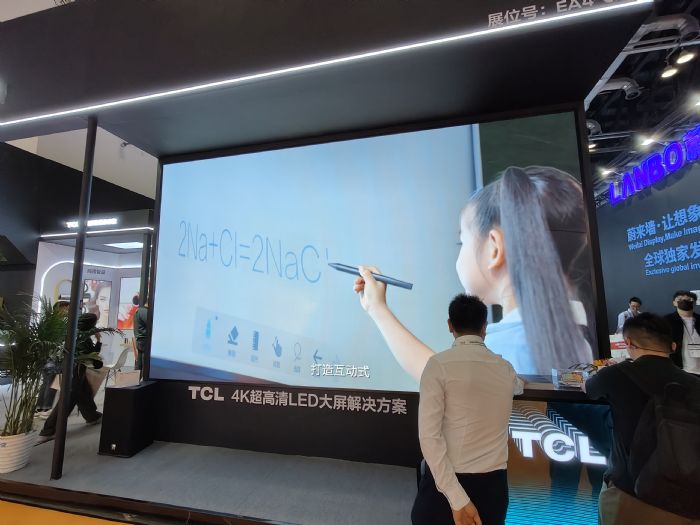
From the upstream supply side, the significant price reduction of LCD panels in tablet commercial display products has ended. There is not much room for sustained significant price declines in the future. However, from the perspective of demand side and terminal brand competition, the market still needs more solutions to optimize supply chain costs. Especially in the education market, global demand is sluggish and internal competition is intense; The popularity of low-cost products such as business market conferences and televisions through simplified interactive configurations will inevitably lead to a downward trend in the overall price level of the industry. And the leading brands in the industry also intend to consolidate their market share by leveraging the cost advantage of purchasing and supplying on a large scale. In 2025, the flat panel business will show that the price may still “squeeze water” under the background that the upstream cost change is not awesome.
On other commercial display categories, a decrease in prices may also be inevitable. For example, the obstacle to the popularization of electronic paper commercial display products is “cost”; One of the core elements of industry transformation is “expanding production capacity”. Expanding production capacity and reducing costs are the consensus of electronic paper merchants, especially the joint action of the medium and large-sized application market. On commercial projection products, the technological change dominated by laser light sources has always been accompanied by price reductions, with brighter and cheaper products being one of the main competitive points in the industry. In the context of sluggish market demand, cost optimization is an inevitable option for the commercial display projection category.
In addition to actively reducing costs and increasing efficiency on the supply side, various segmented product markets for commercial display applications have entered the “sinking market” on the demand side. The global market has also entered a new stage of expanding towards southern countries and increasing towards emerging economies. This determines the importance of further cost reduction for new demand development and the key supporting role for brands to occupy market share.
Based on the above factors, the price changes of various product lines of Da Shang Xian in 2025 may not be as drastic as in the previous three years, but the overall downward trend is a high probability event. The industry market, from supply to demand, from innovation to technological upgrading, from traditional markets to emerging markets… cannot find the factors that support price increases, but often comes with some degree of “price decline” momentum.
5. Outdoor LED direct display market recovery
In 2024, during the global macroeconomic downturn, especially in the third quarter, the outdoor LED direct display market felt a sense of suffocation. This is not a “wonderful” feeling, but it is something that the industry’s own energy cannot change.
The main obstacles in the outdoor LED commercial display market come from two aspects: firstly, the global macro economy is not prosperous enough. The direct reason is the blood pumping effect of interest rate hike cycles such as the US dollar on the global economy. The third quarter of 2024 is precisely the peak of this cycle. This factor, as the US dollar enters a cycle of interest rate cuts, is gradually easing, which will have an expected improvement in the global macroeconomy.
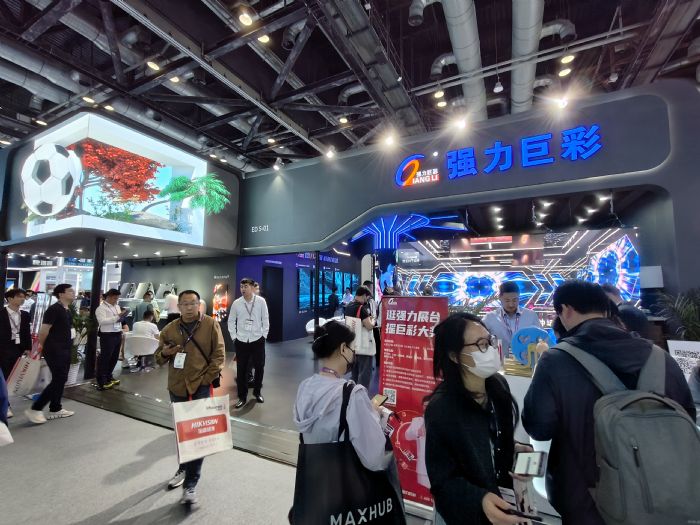
The basic consensus is that the macroeconomy has already passed a downward trough. Against the backdrop of potential increase in geopolitical economic conflicts and worsening trade tensions in 2025, the United Nations Conference on Trade and Development (UNCTAD) expects a growth rate of 2.7% for both 2024 and 2025; The International Monetary Fund (IMF) predicts a global economic growth rate of 3.2% in 2025, which is also on par with 2024; The Organisation for Economic Co operation and Development (OECD) predicts a global economic growth of 3.3% in 2025, which is 0.1 percentage points higher than the 3.2% in 2024.
This will be beneficial for outdoor LED direct display by 2025, and this demand will remain stable or even increase. Especially, the International Monetary Fund (IMF) predicts that the economic growth rate of emerging economies will reach 4.2% by 2025; This is in line with the trend of accelerating the penetration of commercial display applications into southern markets and emerging economies, which will contribute to the structural recovery of the market.
Another factor contributing to the sluggish outdoor LED display market in 2024 is the substitutive impact of “e-commerce” consumption on traditional offline consumer demand. Over the past five years, the global e-commerce market has maintained a compound growth rate of around 15%. This high growth rate will continue to decline in the future. At the same time, the high growth of e-commerce first appeared in developed countries such as Europe and America, and the United States continues to be the largest e-commerce demand market outside of China. And Europe and America are also the main markets for LED direct display outdoor demand. The development of e-commerce has led to changes in the investment return ratio of LED screens for offline commercial institutions, affecting market demand.
However, the growth rate of global e-commerce will continue to slowly decline in 2025. Especially developed countries have introduced administrative adjustments targeting the e-commerce market. The adjustment, including tariffs, will create a more uniform cost environment for e-commerce and offline entities, easing the power of the “e-commerce shock wave”. This will help restore the vitality of offline consumption. At the same time, e-commerce in developed countries in Europe and America is developing in depth, and the trend of combining online and offline has emerged. The era of pure e-commerce and primary e-commerce will end, which is also conducive to the recovery of the outdoor LED direct display market.
Of course, the low point of outdoor LED direct display in 2024 is also affected by factors such as the global travel economy downturn, consumer transformation towards low-cost consumption, and sluggish demand for policy procurement. These factors are mostly related to the macroeconomic situation. With the end of the US dollar interest rate cut cycle and the gradual implementation of loose economic measures to address the possibility of a new round of geopolitical conflicts, consumer enthusiasm in the global market will be restored, which is conducive to the recovery of the LED outdoor market.
In summary, the LED outdoor demand market will still face numerous challenges in 2025, including the accumulation of new challenge factors. However, the good news is that the difficult situation of 2024, especially the core difficult factors, is gradually declining. Even if there is no major recovery in outdoor LED direct display by 2025, it should still be improved under the driving force of demand adjustment, enterprise market strategy extension and upgrading, and cost reduction.
6. Breakthrough of “Intelligent Agent” AI Commercial Display Applications
One of the fundamental driving forces for the development of the commercial display market is the construction of a “digital intelligent” society. As digitalization and informatization progress to the intelligent stage, commercial displays should and will inevitably generate new application value and revolution.
Commercial displays should not only be used for displaying information, advertising, and presenting visuals, but should also become more functional carriers. Especially in the field of “public display space”, exploring the new value of commercial displays and exploring the combination of displays with intelligent technology and AI models has become a new hotspot: although this is not a progress in display technology, it is the hottest track for display applications at present.
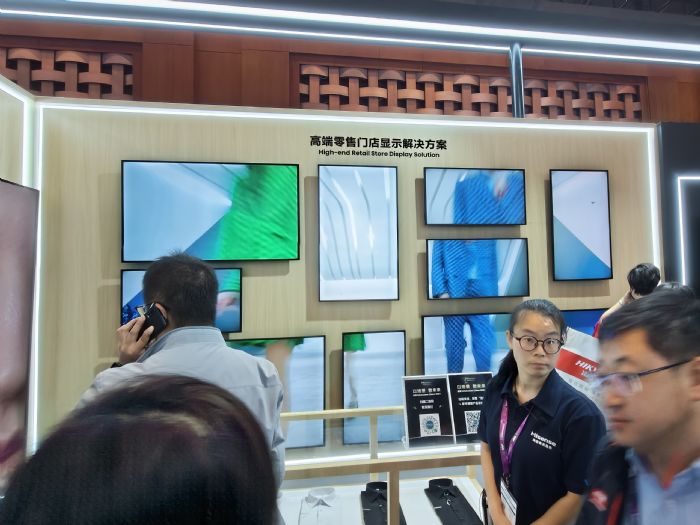
Some companies in the industry have proposed that in the future, some screens in the commercial display market will become “intelligent agents” and “screen type robots”. As an interactive medium, the screen’s active and interactive capabilities will be greatly improved due to the upgrading of the supporting technologies behind it, as well as the successful application of AI and AICG. For example, the dressing magic mirror is an actively interactive and improved commercial display application. Develop “screen type intelligent agent robots” with more “specialized or universal functions”, or a new track in the commercial display industry.
Mei Zhimin, Vice President of Zhouming Group, believes that screen shaped robots are a new symbol of further value exploration and upgrading of “AI+screen”, which can inject new vitality into the entire LED display industry. With the continuous development of AI technology and the expansion of application scenarios, “screen robots” will play a more important role in the future, becoming a bridge connecting virtual and reality, and people and the world.
In fact, this AI+application can be combined not only with LED displays, but also with holographic displays, transparent displays, LCD displays, and so on. Display is the medium, AI+is the core function, creating new functions in traditional scenes, upgrading new value on traditional screens, promoting the upgrading of the “digitalization” level of commercial displays, and creating a new level of experience for commercial display applications. This will open up a new frontier of application and potential for the entire commercial display industry.
In 2025, with the further development of new quality productivity in the AI+hundred thousand industry, the combination of intelligent agents and commercial displays will inevitably become more profound. It is highly likely to become the next popular category for commercial display applications in public settings.
7. The proportion of overseas markets continues to increase
In 2024, there is a saying among commercial display companies, whether it is LCD or LED direct display, that ‘we need to stabilize domestically and break through overseas’! Winning overseas markets is the key to the growth of commercial display enterprises in 2024.
There are three explanations for this: firstly, the domestic commercial display market developed early, has high maturity, and is fiercely competitive, coinciding with the industry downturn in 2024, with limited growth space. Secondly, the overseas commercial display market, especially in regions outside of Europe and America, started relatively late and has many market gaps – and most of these gaps correspond to mature products and solutions in the domestic market. Opening up these markets is not only for Chinese enterprise products to go global, but also for solutions and concepts to go global.
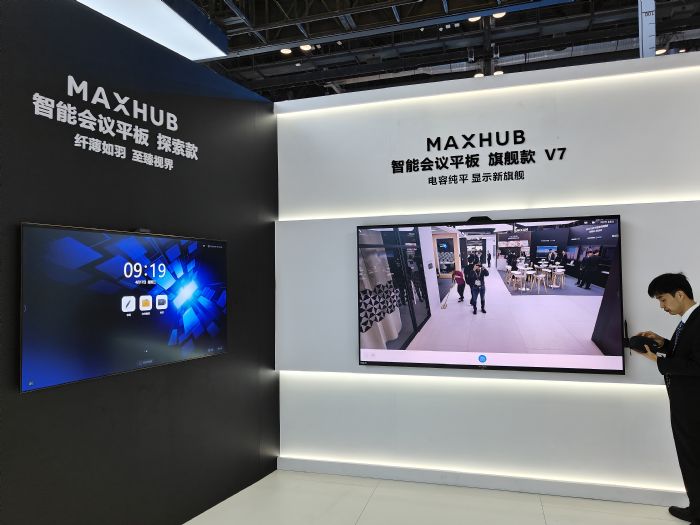
The third is that the global market is clearly a larger “space” than the domestic market; The proportion of domestic display industry in the global market continues to increase, which inevitably requires the export of advanced products and innovative solutions to the world. More importantly, as the cost and price of commercial display products decrease, more and more southern market countries are becoming more affordable and in demand for commercial display products in the process of building a digital society. The overseas expansion of Chinese enterprises is a corresponding and interactive process between demand and supply sides.
Overall, going global is the result of competition, innovation, and the digitization of global social development. The pace of China’s commercial display enterprises going global will not slow down in 2025. The pace of going global will not be disrupted by the recovery of the domestic market. Continuously going out is the mission of the times.
From the data, it has become common for top companies in the commercial display industry to account for over half of their overseas market revenue. Some leading companies are expanding overseas by 70%. The strength and scale of enterprises and brands have become the core market factors determining their overseas presence. On the other hand, expanding into global markets requires higher levels of strength and comprehensive capabilities for enterprises, especially in terms of overseas talent, regulations, and international business rules. This is also a “big test” and “screening” of the enterprise’s ability level. ——Overseas strength leads to enterprise strength, which is both an opportunity and a challenge.
From a challenge perspective, 2024 shows that some companies that rely mainly on solution combinations and lack manufacturing and core innovation capabilities domestically have already declined in their cooperation with overseas enterprises. Overseas partners are more willing to choose partners with strong physical capabilities; Only domestic enterprises with longer industrial chains and genuine innovation capabilities can go further and more steadily overseas. The simple resale trade model used by SenseTime to expand overseas markets is becoming ineffective.
I believe that by 2025, the overseas development of China’s commercial display industry will further advance and expand, and the level of development will also improve. The proportion of independent brands, independent solutions, and innovative technologies will further increase, and the development of overseas markets has gradually entered the era of “high added value”.
8. Increased market share of color TV and ICT brand commercial displays
There are two types of enterprises in the field of commercial display: one is professional commercial display brands; Another type is ICT and TV manufacturers – the latter not only produce commercial display products, but also have a large product line of other types, belonging to comprehensive brands. In recent years, ICT and TV manufacturers have continued to increase their market share in the commercial display market. It is expected that this situation will continue in 2025.
The fundamental reason for the explosive power of ICT and TV companies in the commercial display market is the increase in the scale of demand for commercial displays. That is to say, comprehensive enterprises are more suitable for the competition of “large category” products and for the competition of “sinking markets and popularizing markets”. In this regard, Hisense has leveraged color TV technology and supply chain to achieve high-end breakthroughs in LCD commercial displays such as medical displays and benchmark displays, as well as layout in conference displays and teaching tablets; For example, AOC has opened up the market for new retail commercial display products, promoting the popularization of commercial display applications for small and medium-sized enterprises.
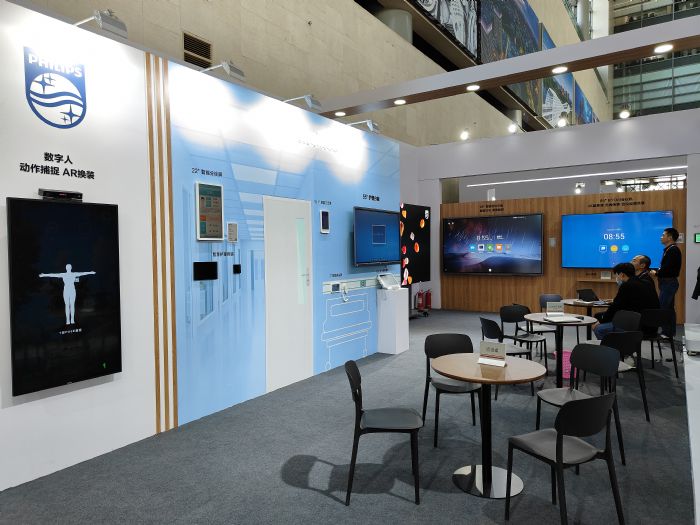
Analysis suggests that in the future, with the deepening of “social digitization and intelligence” construction, the existence of commercial displays will become more prominent; The market size of standardized products and solutions will continue to expand; Popularizing and sinking markets have become the main application entities. This will help companies with “greater brand appeal” stand out. ICT and TV companies can also leverage the advantages of “upstream and downstream procurement scale and ecological partner system scale” to compete.
At the same time, companies such as BOE and Hisense have entered the LED upstream industry chain through mergers and acquisitions, and Konka has built its own LED upstream chip industry chain, giving these comprehensive display giants a long-term evolutionary advantage in core technologies and supply chains of commercial displays. Especially compared to short chain and light asset commercial display solution companies, it has a dimensionality reduction impact on domestic and international competition.
From this, it can be seen that whether it is expanding overseas markets or competing with traditional commercial display brands and ICT/TV brands in the domestic market, the focus will always be on “scale”. Especially for the length and scale of the industrial chain, as well as the scale of core innovation capabilities, there are extremely high requirements. This will drive brand competition in the commercial display industry, further promote high-quality development, and drive the market structure of the industry towards the development of the strong and the strong.
9. LED all-in-one machine new iteration cycle
In 2024, the LED all-in-one machine market has once again been lukewarm for a year. Saying this thing is innovative, but it doesn’t have much sales; However, many manufacturers flock to it even though it cannot be supported. So, where are the pain points of LED all-in-one machines?
It is generally believed that ‘price limits product popularity’. Not to mention 4K models, 2K resolution LED all-in-one machines are often sky high priced. Especially compared to LCD display products priced at 8000 yuan per 100 inches, LED all-in-one machines are often more than 10 times more expensive. Therefore, in the spring of 2024, Samsung convened upstream and downstream enterprises in the industry chain to discuss ways to reduce costs by 90% within a few years.
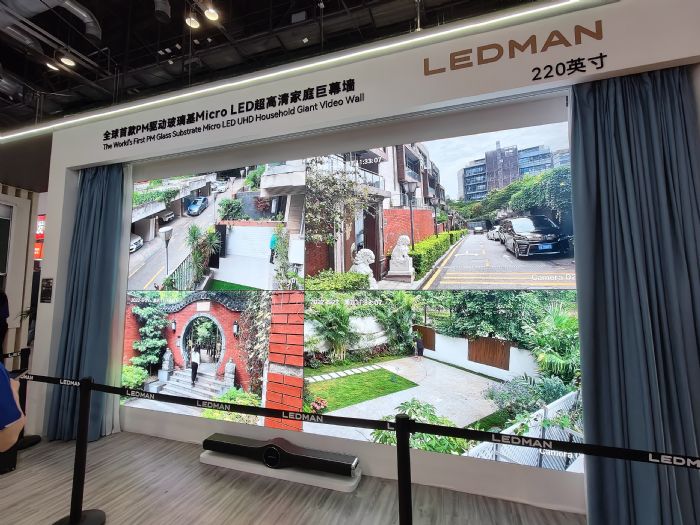
However, the current shortcomings of LED all-in-one machines are not only in terms of price: product thickness, weight, power consumption, and stable and reliable continuous operation are all aspects that need to be improved. If cost is added, it can be seen that LED all-in-one machines are actually facing a basic situation of “good product creativity” but “relatively primitive development and form”. If you want to make LED all-in-one machines popular, then the first step is to “continue to innovate”.
In 2025, it is expected that COB/MIP LED technology will further decrease in price, Micro LED products will accelerate penetration, and the AM LED market will continue to expand. These new changes will significantly affect the development of LED all-in-one products, including not only cost, but also key indicators such as thickness, weight, and power consumption.
Industry enterprises believe that LED all-in-one machines have the potential to achieve a cost comparable to OLED displays in terms of unit display area. At the same time, LED all-in-one machines do not have obvious competitive challenges in the 100-200 inch display market and have exclusive segmented markets. In addition, the high grayscale performance of LED displays in the home market allows for a wide range of adjustable brightness, making it an ideal solution for the era of 100 inch home screens. ——The good experience and significant cost reduction are the reasons why many companies in the industry are optimistic about LED all-in-one machines. It also determines the intensity of future manufacturers’ research and development investment in LED all-in-one machines.
With the support of more new technologies and enthusiastic support from manufacturers, it is highly likely that LED all-in-one machines will undergo further evolution and iteration in 2025. The next generation of LED all-in-one machines is likely to become one of the iconic products in the LED direct display industry by 2025.
10. LED movie screens are accelerating their popularity
The domestic LED movie screen market is expected to experience explosive growth in 2024. In 2024, the annual sales exceeded the total of the past seven to eight years. At that time, the landing and intended orders were close to triple digits. Especially with the breakthrough performance on the 20 meter giant screen, LED movie screens have become the preferred solution for giant screen cinemas, occupying the high ground of industry demand.
However, compared to the size of the entire movie screen market, the LED movie screen market can only be considered as just starting out! The number of screens in domestic cinemas exceeds 86000 in stock, and the annual update volume is also as high as 6000-7000. The total number of screens is close to the sum of Europe and North America. In theory, LED movie screens occupy 10% of the high-end market in the industry and should also have an annual sales volume of 500-1000 yuan.
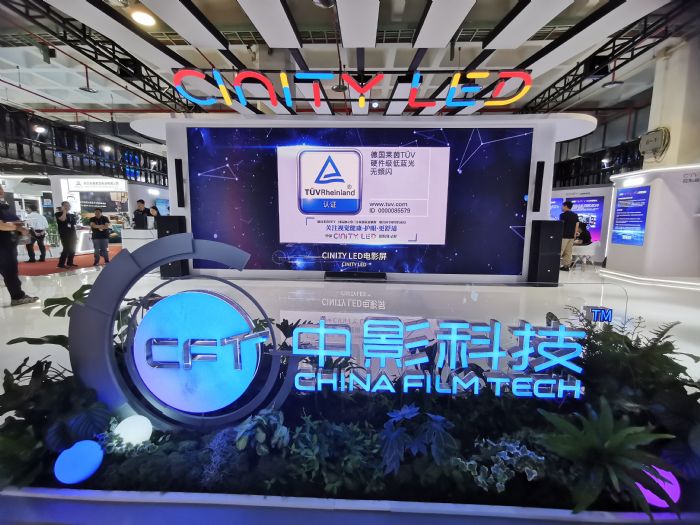
The main reason why the market development of LED movie screens is still in its early stages is due to “price”. Compared to projection screens, especially in 7-14 meter projection halls, the cost of LED movie screens is 5-10 times higher. Industry analysis suggests that LED movie screens have become a substitute, with prices at least dropping to the 1.5-2 times range of traditional screens. This is a huge cost reduction and efficiency enhancement task. It is also a process that requires market size support and slow iteration.
On the other hand, although there will be further breakthroughs in LED movie screens in technologies such as sound screens and support from national equipment renewal subsidies in 2025, the overall market environment is not friendly. Especially in 2025, the overall box office performance of movies was sluggish, significantly affecting the “investment enthusiasm” of major cinemas. Data shows that in the third quarter of 2024, the national film box office was 10.86 billion yuan, a decrease of 43.8% compared to the same period in 2023, and the number of moviegoers was 265 million, a decrease of 43.3% compared to the same period in 2023. This is obviously not good news for the high cost category of LED movie screens.
Looking ahead to 2025, the development of the LED movie screen market will see some improvement. On the one hand, the accelerated popularization of new technologies such as MIP, Micro LED, AM LED, etc. will accelerate the evolution of the new generation of LED movie screens. On the other hand, both LED displays and LED movie screens are in the price reduction channel, and their total cost will further decrease by 2025. At the same time, from the perspective of movie consumption, the third quarter of 2024 is a “macroeconomic low point”. The expected changes in the domestic economy’s stimulus to consumption, loose monetary environment, and increased fiscal support in 2025 will be conducive to the recovery of the consumer market – this level of change has already been demonstrated in the fourth quarter of 2024.
That is to say, under various conditions, the “environment” for LED movie screens on both the supply and demand sides will be better in 2025 than in 2024. Considering the pace of China’s LED movie screen enterprises going global and the initial achievements in global market development, it is highly probable that the overall development of the LED movie screen industry will be better in 2025 than in 2024, and continue to create new heights of development.
In summary, there are many highlights of the commercial display industry in 2025. Among them, the breakthrough and popularization of new LED direct display technology will drive the market upgrade of many product categories and bring about a tilt in the balance of competition among competitors. At the same time, although the significant price reduction of products has ended, the continuous decline in prices and costs is still an inevitable trend for the continuous development of demand and technology. The continuous popularization of products, market sinking, and the exploration of markets in southern countries around the world will become highlights.
From a macro consumption perspective, the possibility of intensified geopolitical and economic conflicts in 2025 is increasing, but the rise in interest rates and strong cycles of world currencies such as the US dollar are likely to end; Combined with the dual support of “broad monetary policy and broad fiscal policy” that countries are more concerned about domestic economic development and need to achieve results internally, the global consumption macro foundation will be stronger in 2025 than in 2024. This is conducive to the further development and recovery of the domestic and international commercial display markets.
At the same time, from a micro perspective, the construction of a “digitalized” society will inevitably accelerate its penetration into every segmented market worldwide, driving the sublimation of commercial display consumption logic and value chain, which will become the greatest certainty for the long-term development of the market. Combining the innovation and progress of display technology itself, the commercial display market has the momentum of cross cycle growth and the potential to take the lead in emerging from the global economic downturn. The commercial display market is worth leading industry enterprises in terms of large cycle layout and investment.
Overall, 2025 may not be an ‘excellent and wonderful moment’, but it is an inevitable upward starting point for the new cycle of commercial display. We look forward to the dual innovation of supply side and demand in the commercial display industry, creating a new myth of industrial growth and promoting the great strides of human civilization on the path of digitization!
